Wais: Designing a Safe Space for Focused Ideation Processes
Untangling the knot of team discussions through the inclusive, objective, and unbiased Six Thinking Hats method.
The Context: Trapped in a Discussion Echo Chamber
The idea generation process often ends in chaos. Newborn ideas are immediately showered with criticism, team members with the loudest voices dominate the conversation, and the main goal of the discussion is slowly forgotten.
This concern originated from our own internal experience when trying to find a big idea for an application. A cycle of meetings that went in circles without clear documentation made us realize one thing:
The main problem was not the idea we were looking for, but how we were looking for it.
From Observation to Understanding
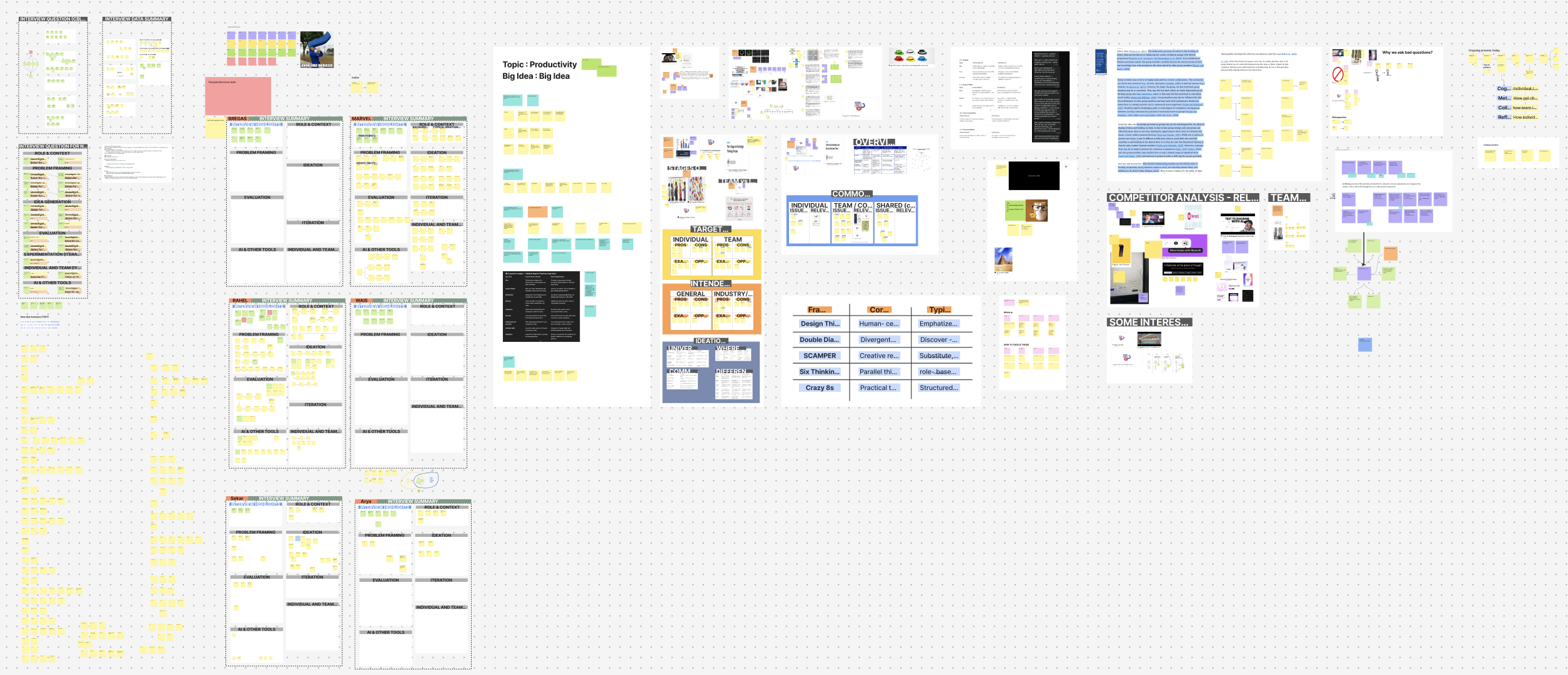
From observing various discussion sessions, we found a recurring pattern of psychological obstacles. Many participants felt reluctant (ewuh pakewuh) to give objective opinions, feared offending colleagues, or felt they
did not have the space because the speaking queue was dominated by one or two people.
After consulting with mentors and exploring various methods, we found that Edward de Bono's Six Thinking Hats Method was the right solution.
This method forces participants to think sequentially (structured) by separating facts, emotions, ideas, and criticism into different sessions. The process untangles participants' cognitive load, democratizes speaking time, and
ensures every perspective is explored fairly.
Defining the Design Direction
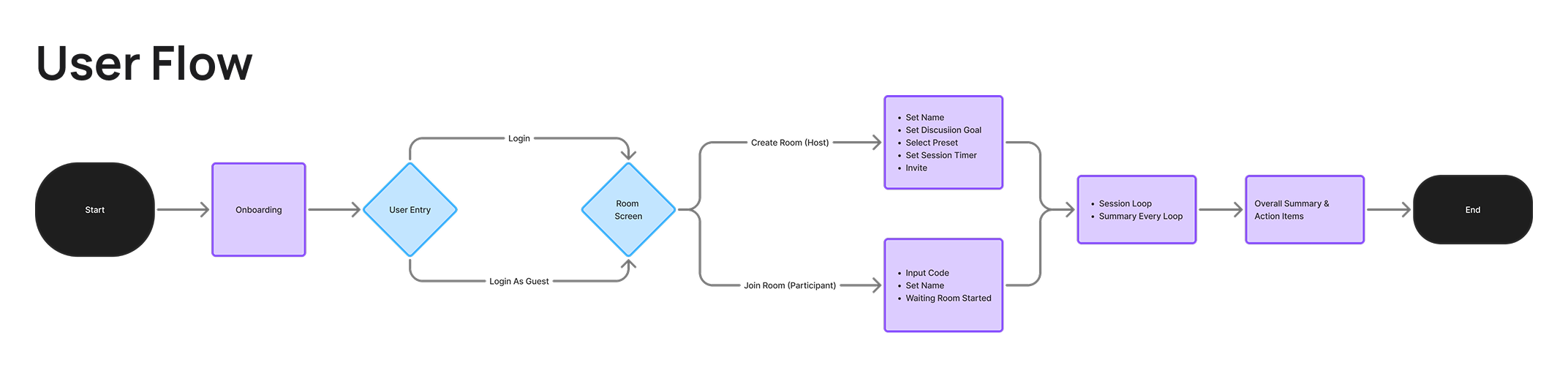
The main challenge was packaging a rigid psychological theory into a natural and low-friction digital experience. We defined Wais's core flow with a frictionless entry approach like a multiplayer game (such as Gartic.io):
- Quick Join: Users are not forced to login. Simply enter a room code to join directly.
- Room Setup: The Host sets the discussion goal and selects the hats combination (presets like Quick Feedback or Custom are available for flexibility).
- Concurrent & Anonymous Input: Participants type ideas simultaneously without waiting in line to speak, in an anonymous space that eliminates job hierarchy.
- AI Summary: The system summarizes and categorizes input at the end of each hat session to guide the next steps.
The Iteration & Design Challenge: Simplifying Complexity
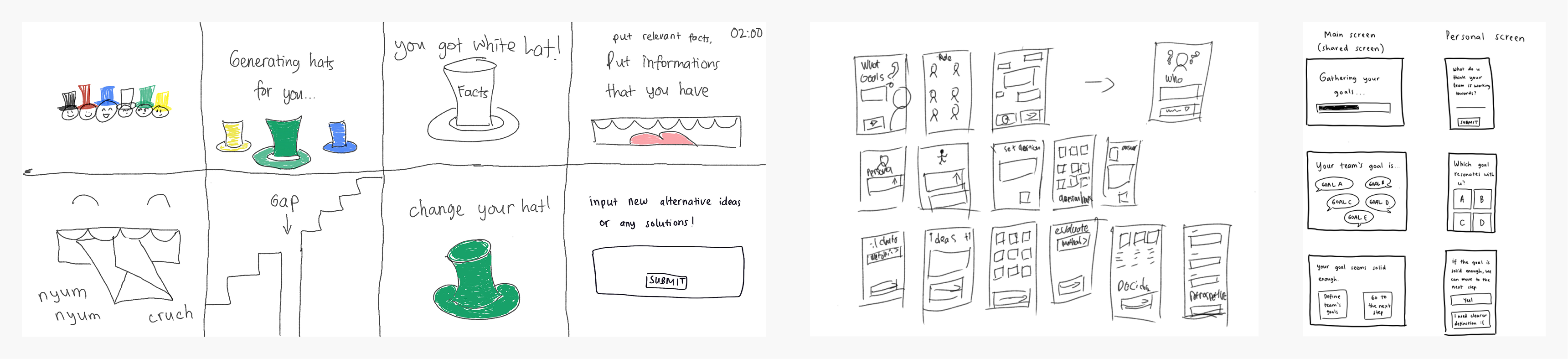
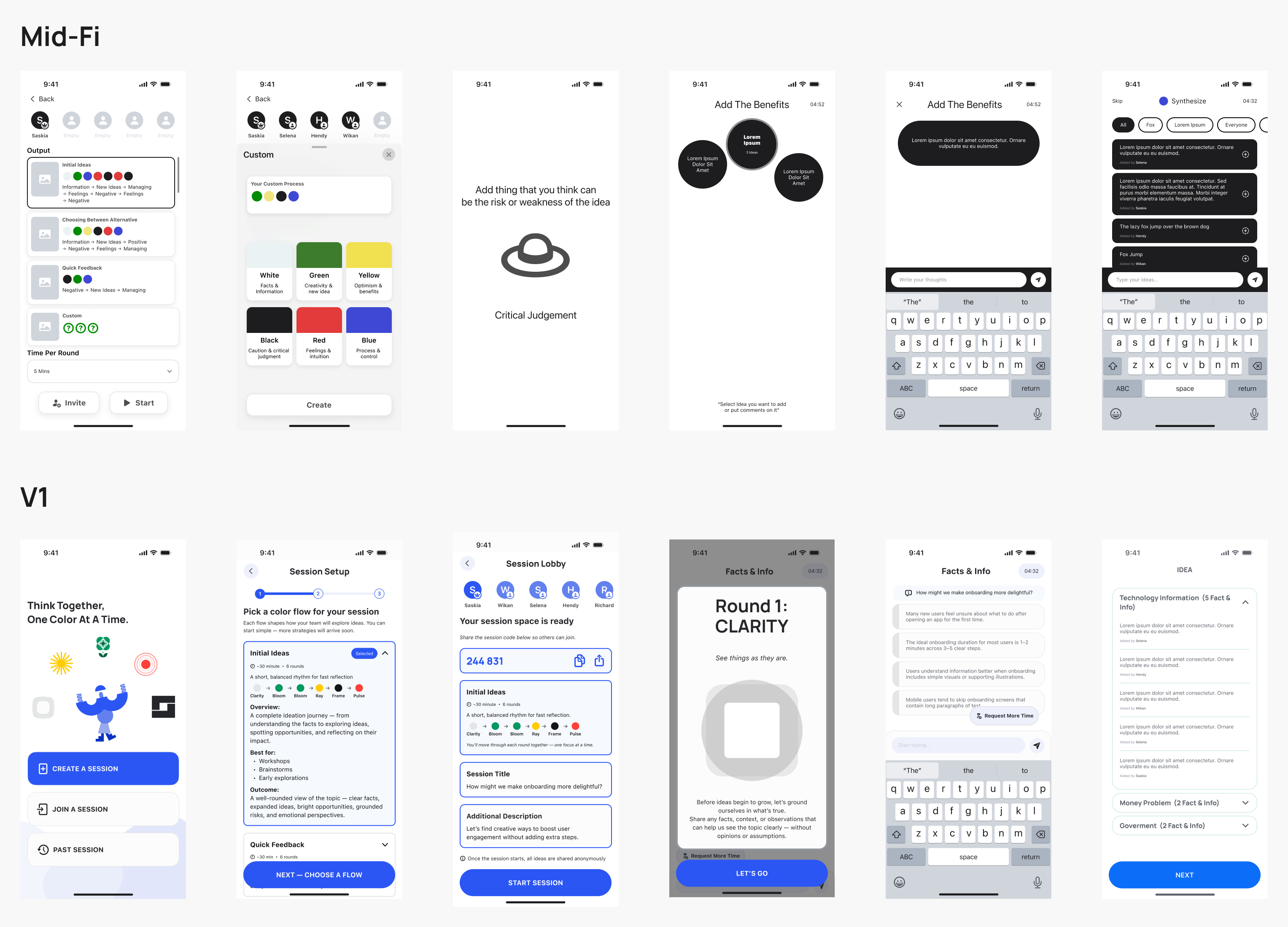
Translating the Six Hats thinking framework into an intuitive UI for general users required many iterations:
- Idea Visualization Challenge: In the initial iteration, we tried the concept of "merging chat bubbles" for similar ideas. It turned out this approach consumed too much screen space and was very complex from a technical development standpoint.
- Pivoting to Personal View: We completely overhauled the interface to resemble a chatting application. While the time is running, participants only see their own input. This prevents groupthink or feeling insecure before pressing the send button. After the session is finished, all cards are merged and categorized.
- Cutting Down Cognitive Load: In the initial version, the explanation for each "hat" was very long and text-dense, overwhelming users who had limited session time to remember. We redesigned the orientation (onboarding) and method selection screens to be much more visual and straight to the point.
The Final Solution & Visual Language
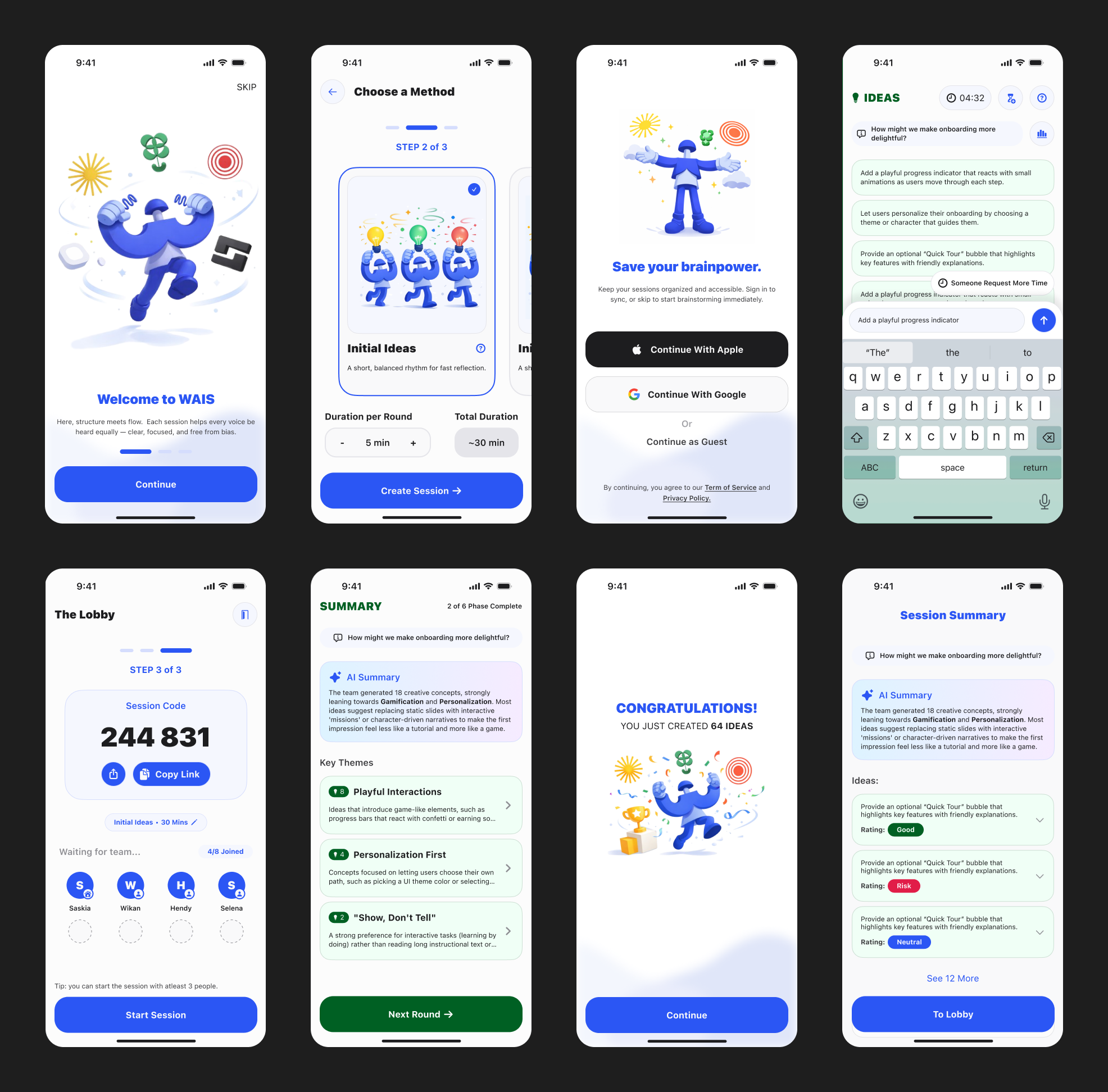
The final result is a discussion companion application that prioritizes psychological safety and clarity of direction:
- Color & Mascot: We use a blue color palette as the main color to instill a sense of trust and security. The presence of a casual mascot and representative icons for each "hat" change keeps the application's mood relaxed yet professional, without appearing childish.
- Focus on Results, Not Process: Instead of letting users read hundreds of piled-up chats, our AI Summary feature automatically categorizes input from all participants into easily digestible points for decision-making reference.
Validation & Impact: From Business Meetings to Vacation Plans
The usability testing results showed a very positive response. Participants felt much safer to express their opinions.
Interestingly, this anonymity and sequential method is not only effective for product development but also for solving everyday problems. Users realized Wais is very helpful for simple things like deciding on a place to eat or a
family vacation destination—accommodating the voices of those with a limited budget or who don't like spicy food, but who previously didn't dare to speak up.
Reflection
Accessibility is key. Wais proves that inclusiveness in discussion can be achieved through the right interface design.
Moving forward, we see great potential to bring Wais to the web platform so it can be accessed from any device without needing to download an application. Additionally, as a business learning from the product design side, we are
also formulating a freemium model to balance user value with the operational costs of AI tokens for the Summary feature.
Nothing great is ever done alone
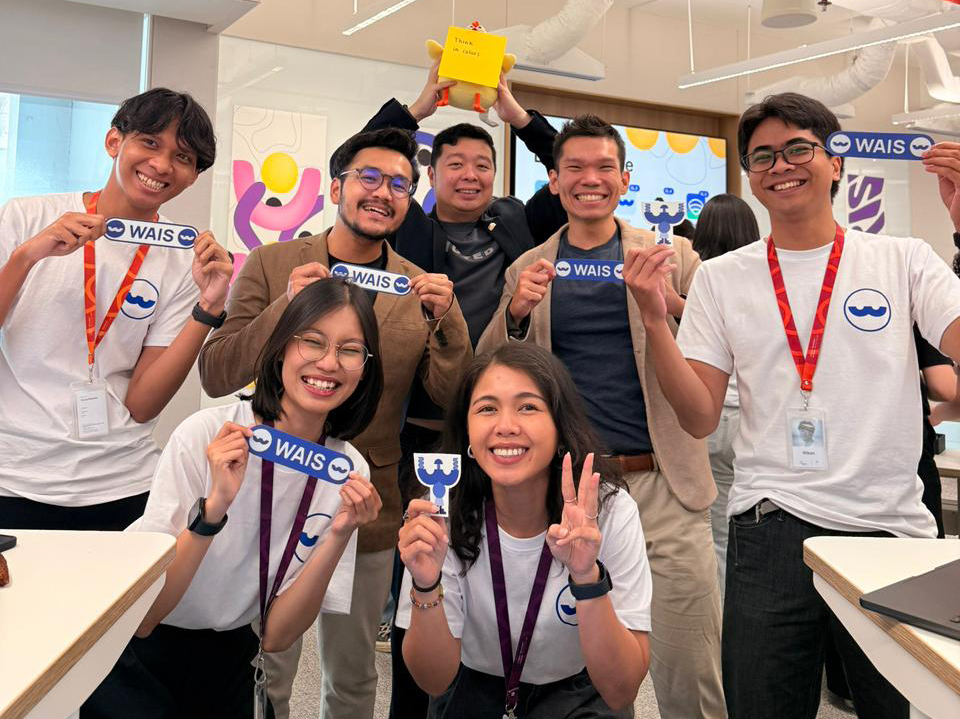
This project came to life thanks to:
UI/UX & Design Research: Hendy Oktavian, Saskia
Coder & Product Manager: Wikan, Selena
Mentors: Richard, Doni, John